


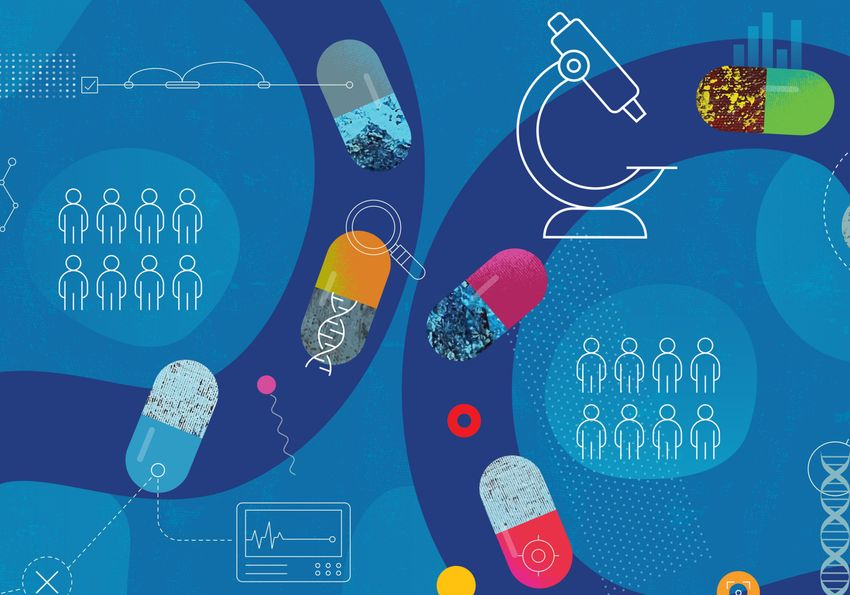
Molecular diagnostic testing uses biological molecules to diagnose disease, provide a prognosis, and monitor treatment responses.
©iStock, DrAfter123
When studying human diseases, the first step is to identify the root cause. But how do scientists find out if the culprit is a genetic mutation, a virus, or something else entirely? Using molecular diagnostics, researchers can not only diagnose disease and identify the cause, but provide a prognosis, identify the specific strain of a pathogen, tailor treatments to individual patients, and assess the effects of a particular treatment. In this article, explore molecular diagnostic testing methods and their application in various diseases.
What Is Molecular Diagnostics?
Molecular diagnostics involves the use of biomarkers such as DNA, RNA, or proteins to diagnose and understand disease. This type of medical test relies on laboratory technologies that amplify, sequence, or measure the levels of these molecules in biological samples such as tissue, blood, or saliva.1
Molecular Diagnostic Testing
Early examples of molecular diagnostics
The Southern blot, which detects specific DNA sequences, was one of the first molecular diagnostic methods to be widely adopted.2 This type of probe-based assay uses a single-stranded oligonucleotide labeled with an enzyme or fluorophore for detection, which hybridizes to the complementary target sequence.3
Using Southern blots, scientists can identify DNA alterations that cause disease, such as the large deletions that cause Duchenne muscular dystrophy (DMD), or repeat expansions that are present in fragile X syndrome and Friedreich’s ataxia.2 This method can also detect other structural changes in DNA, including gene rearrangements that contribute to the development of T- and B-cell lymphomas. For infectious disease diagnostics, these methods typically require in vitro culturing to provide enough detectable genetic material.
These foundational molecular diagnostic methods are both time- and labor-intensive and have low sensitivity.2 To accurately diagnose and monitor disease today, researchers use technologies that detect minuscule amounts of a specific DNA or RNA sequence amongst a plethora of other nucleic acids, much like finding a needle in a haystack.4 For instance, amplification-based, advanced molecular diagnostics methods now allow researchers to test samples with a high level of both sensitivity and specificity.

Molecular diagnostics uses laboratory technologies that amplify, sequence, or measure biological molecules such as DNA, RNA, or proteins to diagnose and understand disease.
Modified from © Stock Images, Royalty-Free Images, Illustrations, Vectors and Videos – iStock , DragonTiger, Inna Miller, grafikazpazurem, Piscine, Trinset, Rungnaree Jaitham; designed by Erin Lemieux
PCR in molecular diagnostics
Polymerase chain reaction (PCR) allows scientists to amplify vanishingly small amounts of genetic material in a sample, such as a mutated gene or a pathogen’s DNA or RNA.3 While the original, manual PCR method was time-consuming and labor-intensive, the advent of the rapid thermocycler led to the widespread adoption of PCR in molecular diagnostics.3

NGS in molecular diagnostics
With the development of next-generation sequencing (NGS), scientists are able to study DNA with unprecedented depth and precision, rapidly sequencing entire genomes or targeted DNA sequences in a cost-efficient manner.5 NGS applications in molecular diagnostics allow researchers to identify rare disease-causing mutations, develop personalized medicines, track the spread of different viral and bacterial pathogen strains, detect pathogenic mutations that enable drug resistance, and manage disease outbreaks in real time.5
CRISPR in molecular diagnostics
A relatively recent development is the application of CRISPR in molecular diagnostics; using a pair of molecular scissors (such as the Cas9 enzyme) and a fluorescent reporter, specialized CRISPR assays can rapidly and accurately detect specific DNA or RNA sequences in biological samples.5 Because CRISPR has the potential for multiplexing, clinicians can use this technology in molecular diagnostics to simultaneously detect multiple targets.5
Molecular Diagnostics Applications
Molecular diagnostics in cancer
Scientists can use molecular diagnostic methods in the field of oncology to identify mutations that contribute to tumor development, tailor personalized treatments, and monitor tumor burden and treatment efficacy.5 For example, non-invasive liquid biopsy and NGS allow clinicians to identify and sequence circulating tumor DNA (ctDNA) in a patient’s peripheral blood, and develop precision medicines based on the specific mutations they identify.6 Molecular diagnostics can also help clinicians provide a more accurate prognosis for patients.5
Molecular diagnostics in organ transplantation
Molecular diagnostics may help scientists diagnose complications resulting from transplant procedures in a relatively non-invasive manner. For example, many heart transplant recipients experience cardiac allograft rejection (CAR) within one year of the transplant procedure, and the gold standard for diagnosing CAR is an invasive procedure called endomyocardial biopsy.7 Recent research has shown the potential for molecular diagnostics in predicting organ rejection and diagnosing other post-transplant complications.7
Molecular diagnostics in infectious disease
Scientists have used molecular diagnostics in the infectious disease field for several decades, with PCR widely considered to be the gold standard for accurate pathogen diagnosis.8 Medical professionals commonly use PCR technology to diagnose chronic viral infections, including human immunodeficiency virus (HIV), hepatitis C virus, and hepatitis B virus.3 Quantitative PCR (qPCR) methods also allow clinicians to monitor a patient’s viral load to assess disease progression and antiretroviral medication efficiency in the treatment of HIV and other retroviruses.3
The COVID-19 pandemic saw scientists use reverse transcription qPCR (RT-qPCR) to accurately diagnose infection with SARS-CoV-2 using nasal swabs.9 In contrast to rapid antigen tests, RT-PCR’s sensitivity allows clinicians to confirm the presence of viral RNA even when the patient’s viral load is low and is much less likely to give false-negative results. In addition to PCR-based diagnosis, NGS enables scientists to understand viral epidemiology and track which viral strains are prevalent. The pandemic also saw researchers develop several CRISPR-based diagnostic tools.
Future Outlooks for Molecular Diagnostics
Molecular diagnostics continues to be a mainstay in disease diagnosis and prognosis and can be a valuable tool for identifying personalized treatments. As scientists continue to develop and refine molecular diagnostic methods, these tools will become more accurate, sensitive, and applicable to a broader range of diseases.
- Alamri AM, et al. Era of molecular diagnostics techniques before and after the COVID-19 pandemic. Curr Issues Mol Biol. 2022;44(10):4769-4789.
- Tsongalis GJ, Silverman LM. Molecular diagnostics: A historical perspective. Clin Chim Acta. 2006;369(2):188-192.
- Schmitz JE, et al. Forty years of molecular diagnostics for infectious diseases. J Clin Microbiol. 2022;60(10):e02446-21.
- Green DM. Improving health care and laboratory medicine: the past, present, and future of molecular diagnostics. Proc Bayl Univ Med Cent. 2005;18(2):125-129.
- Weiskirchen S, Weiskirchen R. Unraveling the future: hot topics shaping molecular diagnostics today. Expert Rev Mol Diagn. 2025;25(4):111-116.
- Riedl JM, et al. Molecular diagnostics tailoring personalized cancer therapy—an oncologist’s view. Virchows Arch. 2024;484(2):169-179.
- Goldberg JF, et al. Selection and interpretation of molecular diagnostics in heart transplantation. Circulation. 2023;148(8):679-694.
- Karagoz A, et al. Monkeypox (mpox) virus: Classification, origin, transmission, genome organization, antiviral drugs, and molecular diagnosis. J Infect Public Health. 2023;16(4):531-541.
- Jayamohan H, et al. SARS-CoV-2 pandemic: a review of molecular diagnostic tools including sample collection and commercial response with associated advantages and limitations. Anal Bioanal Chem. 2021;413(1):49-71.


