


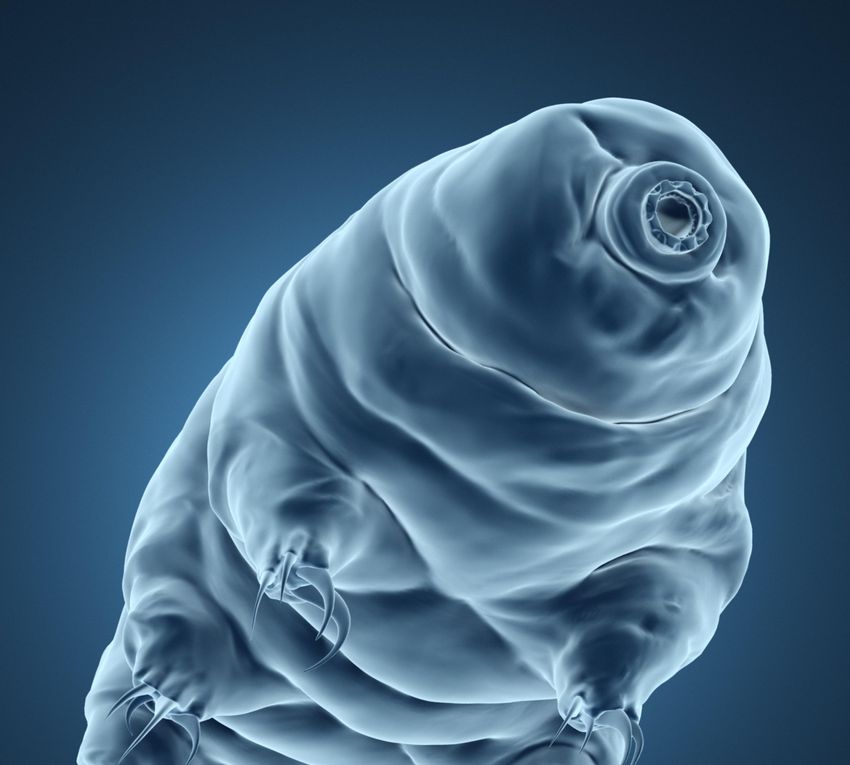
Tardigrades are microscopic animals capable of surviving in extreme environments, making them valuable subjects for scientific research.
©iStock, fruttipics
Scientists discovered tardigrades towards the end of the eighteenth century; however, for many years, they were regarded as an unknown creature.1 In 1773, German pastor and zoologist Johann August Ephraim Goeze was among the first to document tardigrades, calling them “some strange aquatic insects.” Due to their appearance, he compared tardigrades with bears and gave them the colloquial name water bear. This article explores what tardigrades are, their survival strategies, and their research applications.
What Is a Tardigrade?
Tardigrades are microscopic animals that periodically shed their tough external covering, called a cuticle, via molting. Scientists have divided the tardigrade phylum, Tardigrada, into three classes: Heterotardigrada, Eutardigrada, and Mesotardigrada, which together encompass more than 1,500 species and growing.2 They are ubiquitously present in both terrestrial and aquatic environments, from the ocean depths to the highest mountain ranges.
Morphology, feeding habits, and reproduction
Water bears are free-living, water-loving micro-invertebrates whose length ranges between 50 and 1200 μm.3 Eutardigrades have translucent or milky white bodies covered with a flexible cuticle that lacks plates.4 In contrast, many heterotardigrades possess a cuticle that forms various types of plates.
All tardigrades have a bilaterally symmetrical body, divided into a head and four trunk segments.5 Each segment has a pair of legs ending in claws, allowing them to move easily through moist environments and cling to surfaces.
Tardigrades have no specialized organs for respiration or circulation; instead, they rely on diffusion for gas exchange and nutrient transport. Their fluid-filled body cavity, known as the hemocoel, facilitates the transport of nutrients and oxygen throughout the body.6 Despite their small size, tardigrades possess a complex nervous system and a simple alimentary canal that runs straight through the body from mouth to anus.4 They may reproduce through sexual or asexual processes.7 Female water bears discharge their eggs using one of two methods, broadly depending on their taxonomic class. For instance, eutardigrades have a single posterior cloacal opening where the digestive, excretory, and reproductive systems all exit. They typically deposit their eggs into their shed cuticle while molting. In the other method, they lay eggs directly outside the body through a separate gonopore located in front of the anus, which is typical of heterotardigrades.
Tardigrades utilize specialized structures such as stylets and a buccal apparatus to pierce and feed on plant cells, algae, or small invertebrates. These features make them remarkably adaptable to diverse habitats.
Table 1: Examples of tardigrade species and their habits
| Examples | Habitat | Feeding habit |
|---|---|---|
|
Hypsibius dujardini 8 |
Freshwater |
Algae, fungi, and lichens |
|
Milnesium tardigradum 9 |
Terrestrial |
Rotifers, nematodes, and algae |
|
Echiniscus testudo 10 |
Terrestrial |
Plant cells, mosses, and lichens |
|
Tulinus stephaniae 9 |
Terrestrial |
Algae and microorganisms |
|
Ramazzottius cf. varieornatus 11 |
Terrestrial 
|
Algae and plant cells |
|
Paramacrobiotus richtersi 12 |
Terrestrial |
Mosses, algae, and small invertebrates |
Unique Tardigrade Characteristic Features and Survival Strategies
Tardigrades display unparalleled survival abilities.13 They endure extreme conditions and environmental stressors by pausing all metabolic activities via a series of anatomical and physiological changes called cryptobiosis. They undergo different types of cryptobiosis based on the type of environmental stressors, such as lack of water, high osmotic pressure, low temperatures, and lack of oxygen.14 Therefore, water bears can withstand temperatures from near absolute zero to well above boiling, as well as both crushing pressures and the vacuum of space. Tardigrades also exhibit resistance to toxic chemical stressors, such as hydrogen sulfide, 1-hexanol, ethanol, and carbon dioxide, at doses that can be lethal to other organisms.15

Tardigrades survive different extreme environmental stressors through anatomical and physiological changes called cryptobiosis.
Modified from © istock.com, VectorMine, Culombio Art; designed by Erin Lemieux
One specific survival mechanism that tardigrades employ is forming a desiccated, dormant state called a tun by withdrawing their head and limbs and contracting in the anterior-posterior direction, losing most moisture from their bodies in the process.16 In this anhydrobiotic state, they can resist high doses of ionizing radiation and x-rays. Water bears can remain viable in this inactive form from nine to 20 years under natural conditions.4
How tardigrades survive in extreme conditions
Researchers have observed that strong cryptobionts express bioprotectants such as specific sugars that are necessary for survival.17 In contrast, less tolerant species require a period of preconditioning to upregulate the expression of essential protectants and survive extreme conditions. High-fidelity DNA repair systems and antioxidant defense apparatuses also play a crucial role in cryptobiotic survival.
Although the exact cellular mechanisms that support tardigrade cryptobiosis are poorly understood, scientists have identified several molecular strategies. These include the following.
- Intrinsically disordered proteins in the eutardigrade lineage help prevent cellular damage during desiccation, for example in extremely low temperature and water environments. All tardigrade species appear to contain intrinsically disordered late embryogenesis abundant (LEA) proteins, which help stabilize their cells during desiccation by forming a glass-like state called vitrification.17
- A full repertoire of membrane transporters, including numerous solute carriers, membrane pumps, various ion channels, and aquaporins help tardigrades maintain cellular homeostasis and osmoregulation during active life.17
- The tardigrade midgut secretes organic anions, which could be a possible pathway for nitrogenous waste removal. Efficient waste removal is vital for tardigrade survival in extreme conditions, as their excretory system regulates osmoregulation and conserves water during cryptobiosis.17
- The tardigrade damage suppressor protein (Dsup) binds to nucleosomes, protecting chromosomes from reactive hydroxyl radicals that damage DNA.
- Several conserved heat shock proteins (HSPs) in tardigrades play a crucial role in stress tolerance and desiccation, including Hsp40 and Hsp70. By binding to misfolded proteins, HSPs prevent harmful protein aggregation and facilitate damaged protein refolding or elimination.
Tardigrades in Research
Tardigrade investigations provide insights into cell preservation, radiation resistance, and mechanisms that delay cellular deterioration. These unique abilities position them as valuable models for research in medicine, space exploration, and the study of aging.
Space and astrobiology tardigrade research
Scientists have proposed Ramazzottius varieornatus as a valuable model in astrobiology research because it can survive extreme environmental conditions.18
The Tardigrade Resistance to Space Effects (TARSE) Project revealed that tardigrades can survive exposure to space, and spaceflight did not significantly affect their survival or DNA integrity.4 Researchers observed that space travel induces antioxidant responses in tardigrades, increasing glutathione production and elevating glutathione peroxidase activity to neutralize harmful oxidative molecules that compromise DNA integrity.
Based on these findings and other investigations into their resilience, researchers have hypothesized that tardigrades could potentially survive interplanetary travel inside a large meteorite due to their remarkable resistance to vacuum, radiation, and desiccation.4 Their survival in space also lends support to the plausibility of the panspermia theory, which hypothesizes that life can spread between planets via meteoroids or other celestial bodies. However, the extreme shock pressures from high-speed, cross-solar system meteorite impacts would likely exceed tardigrades’ survival limits, challenging the theory’s probability.
Biomedical tardigrade research
Researchers have observed that the tardigrade’s Dsup protein protects DNA from reactive oxygen species (ROS) and ionizing radiation. Because oxidative stress plays a major role in inflammation and many human diseases, scientists are investigating ways Dsup could reduce oxidative damage and help treat various conditions.
For example, transfecting the Dsup protein into human cells in culture led to a decrease in apoptotic signals and an increase in DNA damage response and repair under x-ray radiation.16 Research in plants has also demonstrated that inserting the Dsup-encoding gene into tobacco plants significantly improves cell survival after exposure to UV and x-rays. Multiple studies have demonstrated the robust potential of the Dsup protein to protect biomedical cells from DNA damage caused by radiation and oxidative stress, as well as to shield healthy tissues during cancer therapy. Current research focuses on safe delivery methods for Dsup in human clinical applications.16
Aging tardigrade research
Tardigrades play a crucial role in aging and longevity research due to their ability to protect their cells and DNA from damage caused by stress, dehydration, and radiation.19 The Dsup proteins and other cellular mechanisms that tardigrades use to prevent cellular aging and maintain genomic stability could inspire new strategies to delay aging, enhance DNA repair, and protect human cells from age-related deterioration. By studying these processes, scientists aim to develop therapies that enhance health spans and increase resilience to age-related diseases in humans.
Final Thoughts on the Tardigrade Research
Researchers use tardigrades as a model to investigate the boundaries of life’s resilience under extreme conditions, both on Earth and in extraterrestrial environments. Their extraordinary ability to survive through cryptobiosis not only inspires new directions in astrobiological research but also holds promise for biomedical and aging studies. The unique mechanisms that enable tardigrades to protect and repair their cells under stress could potentially inform breakthroughs in human medicine such as enhancing tissue preservation, developing new therapies for age-related diseases, and improving human tolerance to extreme environments.
As scientists continue to unravel the genetic and physiological foundations of tardigrade endurance, these tiny organisms may unlock key insights into the potential for life to persist beyond our planet and new approaches for improving human health and longevity.
FAQ
What makes tardigrades important for scientific research?
- Tardigrades can survive extreme conditions that are lethal to most other organisms, such as intense radiation, extreme temperatures, dehydration, and the vacuum of space. Their unique survival strategies, including cryptobiosis and specialized protective proteins, offer valuable insights into cellular protection, DNA repair, and stress tolerance. By studying tardigrades, scientists can better understand the limits of life and develop advances in medicine, biotechnology, and aging research.
How are scientists using tardigrades to help humans?
- Scientists believe that elucidating the tardigrade’s unique survival mechanisms might benefit humans. By understanding proteins such as Dsup, which protects DNA from radiation and damage, researchers aim to develop new methods to protect human cells during cancer treatments, enhance tissue and organ preservation for transplants, and slow down the aging process.
Can tardigrades survive space missions?
- In the TARSE Project, researchers sent tardigrades to outer space, exposing them to vacuum pressures, extreme temperatures, and cosmic radiation. Interestingly, when scientists brought these tardigrades back to Earth, many species were successfully revived and even able to reproduce. Tardigrades are the first known animals to survive direct exposure to space.
- Schill RO. 250 years of tardigrades: Goeze’s discovery of a rare and peculiar creature. Org Divers Evol. 2025;25:1-2.
- Novotná FK, et al. Phylogenetic and functional characterization of water bears (Tardigrada) tubulins. Sci Rep. 2023;13(1):1-13.
- Kaczmarek Ł. Tardigrada: An emerging animal model to study the endoplasmic reticulum stress response to environmental extremes. Prog Mol Subcell Biol. 2021;59:305-327.
- Weronika E, Łukasz K. Tardigrades in space research – Past and future. Orig Life Evol Biosph. 2017;47(4):545-553.
- Nelson RD, et al. Tardigrada. In: Ecology and Classification of North American Freshwater Invertebrates. Academic Press; 2010:455-484.
- Nelson DR. Current status of the tardigrada: Evolution and ecology. Integr Comp Biol. 2002;42(3):652-9.
- Sugiura K, Matsumoto M. Sexual reproductive behaviours of tardigrades: a review. Invertebr Reprod Dev. 2021;65(4):279-287.
- GĄsiorek P, et al. An integrative redescription of Hypsibius dujardini (Doyère, 1840), the nominal taxon for Hypsibioidea (Tardigrada: Eutardigrada). Zootaxa. 2018;4415(1):45-75.
- Förster F, et al. Tardigrade workbench: Comparing stress-related proteins, sequence-similar and functional protein clusters as well as RNA elements in tardigrades. BMC Genomics. 2009;10:469.
- Murai Y, et al. Multiomics study of a heterotardigrade, Echinisicus testudo, suggests the possibility of convergent evolution of abundant heat-soluble proteins in Tardigrada. BMC Genomics. 2021;22(1):813.
- Kamilari M, et al. Comparative transcriptomics suggest unique molecular adaptations within tardigrade lineages. BMC Genomics. 2019;20(1):607.
- Guidetti R, et al. High diversity in species, reproductive modes and distribution within the Paramacrobiotus richtersi complex (Eutardigrada, Macrobiotidae). Zoological Lett. 2019;5:1.
- Haapanen-Saaristo A, et al. High-resolution live imaging of tardigrade response to anoxia. Micron. 2025; 103847:196-197.
- Neumann S, et al. DNA damage in storage cells of anhydrobiotic tardigrades. Comp Biochem Physiol A Mol Integr Physiol. 2009;153(4):425-429.
- Sadowska-Bartosz I, Bartosz G. Antioxidant defense in the toughest animals on the earth: Its contribution to the extreme resistance of tardigrades. Int J Mol Sci. 2024; 25(15):8393.
- Kasianchuk N, et al. The biomedical potential of tardigrade proteins: A review. Biomed Pharmacother. 2023;158:114063.
- Mobjerg N, Neves RC. New insights into survival strategies of tardigrades. Comp Biochem Physiol A Mol Integr Physiol. 2021;254:110890.
- Daiki DH. The Tardigrade Ramazzottius varieornatus as a Model Animal for Astrobiological Studies. Biol Sci Space. 2008;22(3):93-98.
- Nagwani AK, et al. Applicable life-history and molecular traits for studying the effects of anhydrobiosis on aging in tardigrades. Diversity. 2022;14(8):664.


